Hailstorms can cause damage that isn’t always obvious at first glance. While some dents are easy to spot, others may go unnoticed until they lead to long-term cosmetic or structural issues. Knowing how to check for Hail Damage on Your Car involves understanding what to look for and how to evaluate your vehicle properly, which can help you avoid missed repairs, insurance complications, and reduced resale value. This guide explains what hail damage looks like, where to inspect your car, and when a professional evaluation becomes necessary.
Hail damage doesn’t present itself in one uniform way. The size, density, wind speed, and duration of the storm all influence how damage appears on a vehicle. Smaller hailstones may leave shallow dimples that blend into the body lines, while larger hail can cause sharp dents, chipped paint, or cracked trim.
The most common misconception is that hail damage is always obvious. In reality, many vehicles sustain dozens, or even hundreds, of micro-dents that are only visible under the right lighting conditions. These dents often don’t break paint, which makes them harder to detect but still relevant for insurance claims and resale value.
Another factor to consider is panel sensitivity. Flat, horizontal surfaces tend to take the brunt of hail impact. Aluminum panels, increasingly common in modern vehicles, may dent more easily than steel. Dark-colored vehicles often show damage more clearly in sunlight, while light-colored cars may require closer inspection.
When learning how to check for hail damage on a car, it’s important to remember that damage isn’t limited to dents alone. Hail can also affect weather stripping, window trim, side mirrors, and even internal components if seals are compromised. Paint chipping or clear-coat damage may not appear immediately, but can worsen over time if moisture penetrates exposed areas.


A proper inspection starts with the right environment. Choose a well-lit area, preferably outdoors in indirect sunlight or inside a garage with strong overhead lighting. Harsh midday sun can hide dents, while low-angle light makes them more visible.
Begin with the roof. This is the most commonly damaged area and often overlooked because it’s not in direct view. Use a step stool if needed and look across the surface at an angle. Move your head slowly and watch for distortions in reflections.
Next, inspect the hood and trunk lid. These flat panels are highly susceptible to hail impacts. Open and close the hood as well; sometimes, dents are more visible when the panel angle changes.
Doors and fenders should be checked individually. Stand at the front and rear corners of the vehicle and look down the sides, scanning for ripples or irregular reflections. Pay special attention to upper door sections near window lines, as hail often strikes at an angle due to wind.
Don’t forget non-metal components. Check side mirrors, plastic trim, headlights, and taillights for cracks or scuffing. Inspect windshield edges and window seals for chips or loosened trim that could lead to leaks later.
Using touch can help, but cautiously. Running your fingertips lightly over panels may reveal shallow dents that your eyes miss. Avoid pressing hard, as this won’t improve detection and could damage paint.
This hands-on process is a core part of understanding how to check for hail damage on a car, but it still has limitations, especially for subtle or widespread damage.
Even a careful visual inspection may not reveal the full extent of hail damage. Some issues develop over time or remain hidden until they cause secondary problems. One common example is compromised paint integrity. While the paint may look intact initially, microscopic fractures can allow moisture to seep in, leading to corrosion months later.
Another overlooked area is under trim and molding. Hail can dent metal beneath roof rails, window trim, or hood insulation. These areas aren’t visible without partial disassembly, but damage there still counts in professional assessments.
Drainage systems are another concern. Modern vehicles rely on small channels around windshields and sunroofs to manage water flow. Hail impact can misalign panels or clog drains with debris, increasing the risk of interior water damage.
Structural alignment issues, while rare, can occur in severe storms. Repeated heavy impacts may slightly alter panel fitment, causing doors or hoods to sit unevenly. This can affect aerodynamics, wind noise, and long-term wear.
Insurance documentation is also a critical aspect that many drivers underestimate. Damage that goes unreported or is improperly documented can complicate future claims, especially if another storm occurs later. Professional evaluations often include detailed mapping of dents, which protects vehicle owners from claim disputes.
At this stage, many drivers realize that knowing how to check for hail damage on a car is only part of the equation; accurate assessment often requires trained eyes and specialized tools.
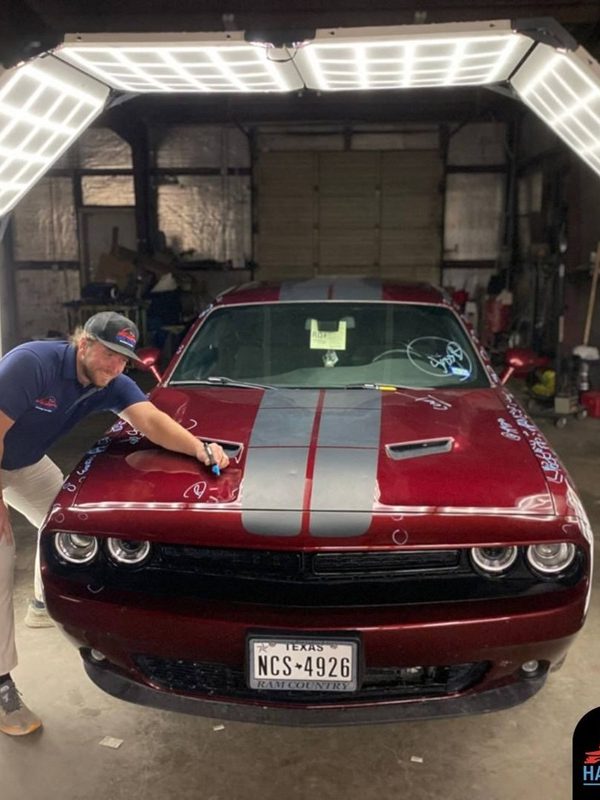

If you suspect hail damage but aren’t fully confident in your inspection, a professional evaluation is the next logical step. Trained technicians use controlled lighting systems, reflection boards, and panel-specific techniques to identify damage that isn’t visible under normal conditions.
Paintless Dent Repair (PDR) specialists, in particular, are skilled at detecting even the smallest dents. Their assessments are not just about repair feasibility but also about documenting the full scope of damage for insurance purposes. This ensures that no affected panels are overlooked during the claim process.
Timing matters. Most insurance policies have reporting windows for storm damage, and delays can raise questions about whether damage came from a specific event. A prompt professional inspection helps establish a clear timeline.
Another advantage of expert assessment is understanding repair options. Not all hail damage requires repainting or panel replacement. In many cases, dents can be repaired while preserving the original factory finish, which is better for vehicle value.
This is where experienced service providers like The Hail Group play an important role. By focusing exclusively on hail damage evaluation and repair, they help vehicle owners understand the condition of their car without unnecessary guesswork or rushed decisions.
Ultimately, a professional assessment provides clarity, protects your investment, and ensures that any necessary repairs are handled the first time correctly.
Definitely not. Damage from hail falls under what is termed a comprehensive claim, often referred to as an “Act of Nature.” These are events beyond anyone's control and cannot be anticipated. As such, insurance providers do not penalize policyholders with these types of claims on their records by raising their insurance rates. Your insurance representative can confirm the same when you inquire about comprehensive claims.
The cost of repairing hail damage on vehicles can fluctuate widely based on various aspects, such as the vehicle's condition and the extent of the damage. Minor damage often starts at approximately $3,000, whereas more significant harm requiring the replacement of panels and parts can surpass $15,000.
Nonetheless, hail damage falls under the umbrella of comprehensive insurance coverage. Choosing The Hail Group for your repair needs typically means you won't face any direct costs, covering everything from repair bills and insurance deductibles to rental car fees. For those without comprehensive insurance, we encourage you to contact us at (855) 666-4245 for tailored pricing options. Rest assured, our pricing is always equitable and clear.
Should your insurance policy not include rental car coverage and your vehicle requires an extended stay at our facility for repairs, The Hail Group will provide up to $35 daily towards a rental car. Considering the average rental car expense is around $17 per day, this allowance should sufficiently meet the needs of most of our clients.
Furthermore, for added convenience, we're happy to meet you at the rental agency to facilitate a smooth transition!
Absolutely. Upon request, we'll keep you informed with photos and updates, ensuring full transparency throughout the process.
A key advantage of Paintless Dent Repair (PDR) is its durability; once the metal is reshaped to its initial form, it remains so for the vehicle's lifespan. Should you encounter any issues with your car in the future that you suspect are linked to our repair work, don't hesitate to reach out. We're committed to rectifying the situation!
Our approach to customer service is guided by the principle of treating others as we'd like to be treated ourselves. This philosophy has earned us an A+ rating from the Better Business Bureau, something we take great pride in.
For customers who prefer not to travel all the way to our location, we provide a complimentary valet service for complete auto hail damage repairs.
When you opt for our valet service to the The Hail Group facility, a customer service representative will be dispatched to collect your vehicle. We will handle all communications with your insurance regarding the damage assessment and updates on the repair process. Upon completion of your vehicle's repairs, your representative will bring it directly back to you. Moreover, if The Hail Group has supplied you with a rental car, your representative will also take care of its return, at no extra cost to you!
Damage assessments can be quite subjective and may differ significantly. Moreover, identifying hail damage can be challenging in bright outdoor light, hence our reliance on specialized lights for paintless dent repair.
As experts in the field of auto hail damage repair, we are adept at addressing and settling such discrepancies. We will engage directly with your insurance provider to secure any extra funding (referred to as "supplements") required to restore your vehicle to its original condition before the loss.
Typically, you're allotted one year from the date of an incident to file a claim and get your car repaired. However, this timeframe can differ depending on the specifics of your insurance policy, so it's wise to initiate your claim and address the damage promptly.
It's important to note that the initial repair estimate is calculated based on the current costs of labor and parts. These prices are subject to change over time.
Opting not to repair hail damage on your vehicle and instead settling your insurance claim with a cash payout will lead to a limitation being placed on your policy regarding the unrepaired damage. This decision can lead to complications for several reasons.
Consider this scenario:
This discrepancy often arises because the initial insurance estimate typically (in 99.9% of cases) fails to cover all the actual damage. Thus, when you ponder over the real value of that $2,500, especially when it ends up costing you $10,000 in trade-in value, it's a significant loss.
This scenario isn't speculative; it's a common occurrence we've witnessed repeatedly.
Should you decide to proceed with the hail damage repairs at a later stage, it's crucial to inform your agent to lift any imposed restrictions on your policy.
Google Reviews

"Fine group of staff! Initially, I met Ben and Joe! I was sold on the service because of their professionalism! Later, I met Logan and Adrian. Great group to work with. I love the way my car turned out. It was worth the wait!"

"Completely awesome and great customer service. this is the second place i’ve been to trying to fix the hail damage on my car and they were the ones who could fix them the best!! like it never even happened!! awesome job!!"

"Amazing people and great service!! They were able to help get the dents out of my vehicle from a recent storm that had passed. Absolutely loved the experience, highly recommended!"