Minnesota sits squarely inside “hail alley’s” northern reach, and St. Paul drivers know the sound all too well: that rapid drumming on the roof that means another round of dents is on the way. Minnesota consistently ranks among the top states for hail-related insurance claims, and the Twin Cities metro absorbs a large share of that damage every storm season. If your car, truck, or SUV came out of the last storm looking like a golf ball, you’re far from alone, and the good news is that Auto Hail Damage Repair in St. Paul, Minnesota can restore most of that damage without repainting.
This guide walks through what causes hail damage in St. Paul, how professional repair actually works, what to expect from the insurance process, and how to pick a shop that won’t cut corners.
Minnesota’s severe weather season runs roughly from April through September, with the heaviest hail activity concentrated in late spring and summer when warm, moist air collides with cold fronts moving through the Upper Midwest. St. Paul, sitting along the Mississippi River in the eastern Twin Cities, is directly in the path of these storm systems as they track east from the Dakotas and western Minnesota.
A few things make the metro particularly vulnerable:

out of the last storm looking like a golf ball, you’re far from alone, and the good news is that most of that damage is fully repairable without repainting.
This guide walks through what causes hail damage in St. Paul, how professional repair actually works, what to expect from the insurance process, and how to pick a shop that won’t cut corners.
Minnesota’s severe weather season runs roughly from April through September, with the heaviest hail activity concentrated in late spring and summer when warm, moist air collides with cold fronts moving through the Upper Midwest. St. Paul, sitting along the Mississippi River in the eastern Twin Cities, is directly in the path of these storm systems as they track east from the Dakotas and western Minnesota.
A few things make the metro particularly vulnerable:
Open exposure. Suburban and exurban neighborhoods around St. Paul have plenty of surface parking, driveways, and street parking with limited covered protection.
Storm clustering. Minnesota doesn’t usually get one hail event a year; it’s common to see multiple significant storms hit the same neighborhoods within a single season, compounding damage on vehicles that already took a hit.
Rapid intensification. Supercell thunderstorms in this region can go from clear skies to golf-ball-sized hail in under 30 minutes, leaving little time to move a car under cover.
The result is thousands of St. Paul vehicles every year with dented hoods, roofs, trunk lids, and fenders, sometimes cracked windshields and mirrors too. Left unaddressed, this isn’t just cosmetic. Dents compromise paint integrity in the long run, can trap moisture at stress points, and noticeably reduce resale and trade-in value.
Most hail dents on modern vehicles are repaired using Paintless Dent Repair (PDR), and understanding why matters before you agree to any estimate.
Why PDR is the industry standard. Hail dents are typically shallow, rounded impressions that haven’t stretched or cracked the paint. A trained PDR technician accesses the back side of the panel through door cavities, trunk openings, or by temporarily removing interior trim, and uses specialized metal rods and glue-pulling tools to gently massage the metal back to its factory shape from underneath. No sanding, no fillers, no repainting.
Why that’s the better outcome for you:
Preserves factory paint and finish, which matters for resale value and avoiding future clear-coat issues
Faster turnaround; many vehicles are completed in 1–3 days versus a week or more for conventional bodywork
Lower cost than traditional dent repair, which requires paint matching, blending, and cure time
No paperwork trail showing repainted panels, which some buyers and appraisers view unfavorably compared to PDR work
What a typical repair process looks like:
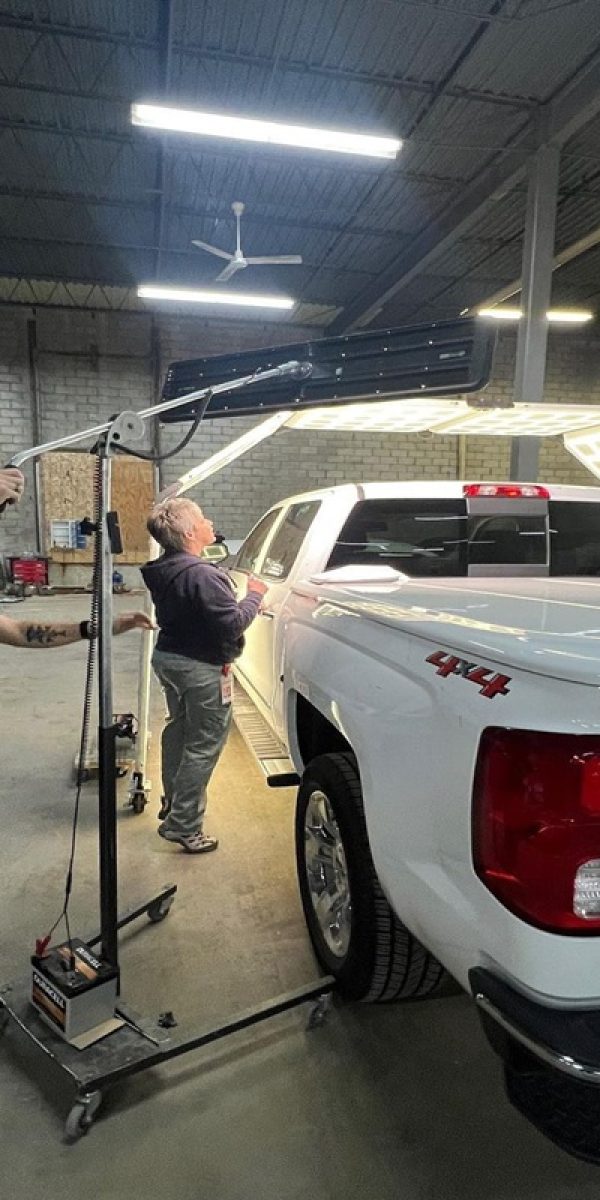
Inspection and estimate. A technician examines the vehicle panel by panel, sometimes with specialized lighting that reveals dents invisible in normal daylight, and documents dent count, size, and location.
Insurance coordination (if applicable). The estimate is matched against your insurer’s hail damage assessment, and any gap in dent count or severity is negotiated on your behalf.
Dent-by-dent repair. Technicians work systematically across each panel, checking their work against reflection lines and gauge lighting until the surface reads flat and true.
Quality check and detail. The vehicle is inspected under multiple lighting angles before handoff, and often given a wash or light detail so you can see the finished result clearly.
Minnesota is generally favorable to policyholders on hail claims, but the process still has pitfalls that catch St. Paul drivers off guard.
Filing the claim. Comprehensive coverage (not liability-only) is what pays for hail damage, and most policies have no waiting period tied to a storm date, but insurers do watch for suspiciously delayed claims, so filing promptly after a storm strengthens your position.
The adjuster estimate vs. the shop estimate. Insurance-company adjusters often use standardized software to estimate dent counts and repair cost, and these numbers can undercount real damage, especially in hard-to-see areas like roof edges or upper door panels. This is exactly why a second, independent estimate from an experienced repair shop matters; a shop that repairs hail damage daily can spot dents the adjuster’s tool misses and can supplement the claim with photo documentation.
What to look for in a St. Paul repair shop:
The Hail Group specializes in exactly this kind of storm-damage repair work, and you can review examples of completed jobs and shop capabilities across regional service pages such as Auto Hail Repair in St. Louis, Hail Damage Repair in Colorado Springs, and the general Automotive Hail Damage Repair overview page, which explains the process and standards used across every market The Hail Group serves.
Protecting your vehicle before the next storm:
If you’re weighing whether repair is worth it versus living with the damage, the resource on how you can protect your car from hail and the breakdown of how to fix hail damage on a car are both useful starting points before your appointment.
Many hail dents are difficult to see in normal daylight, especially on the roof and hood. A professional inspection using specialized lighting can reveal small dents, paint damage, and other issues that may not be visible during a basic visual check.
In most cases, yes. Paintless Dent Repair (PDR) removes dents without sanding, fillers, or repainting, allowing your vehicle to keep its original factory finish. PDR is often the preferred repair method when the paint has not been cracked or chipped.
If you carry comprehensive auto insurance, hail damage is typically covered. Most insurance policies treat hail as an "Act of Nature," meaning repairs are generally covered after your deductible, depending on your policy terms.
Repair time depends on the number and severity of dents, the repair method, and insurance approval. Minor hail damage may be completed within a few days, while vehicles with extensive damage can take longer to restore properly.
Delaying repairs can reduce your vehicle's resale value and allow damaged paint or exposed metal to deteriorate over time. Prompt repairs also help simplify the insurance claims process and restore your vehicle before additional problems develop.
Our Lifetime Warranty covers all repairs conducted by The Hail Group, providing you with comprehensive protection.
With our warranty, rest easy knowing your vehicle's repairs are guaranteed for life, underlining our commitment to long-term customer satisfaction.
As a family-owned business, we pride ourselves on honesty and reliability. Your trust is our top priority, and our warranty is our commitment to you.
Google Reviews

"Fine group of staff! Initially, I met Ben and Joe! I was sold on the service because of their professionalism! Later, I met Logan and Adrian. Great group to work with. I love the way my car turned out. It was worth the wait!"

"Completely awesome and great customer service. this is the second place i’ve been to trying to fix the hail damage on my car and they were the ones who could fix them the best!! like it never even happened!! awesome job!!"

"Amazing people and great service!! They were able to help get the dents out of my vehicle from a recent storm that had passed. Absolutely loved the experience, highly recommended!"