Plenty of Kansas City drivers have heard the term paintless dent repair without fully understanding what actually happens during the process. It sounds almost too simple to be real: fixing a dent without any paint or filler involved, but the technique is well established and backed by decades of use in the auto body world. Here’s a straightforward, no-jargon explanation of how it actually works, from the first inspection through the final check.
The Basics of Paintless Dent Repair
At its core, paintless dent repair is a technique that reshapes dented metal from behind the panel, without any fillers or repainting involved. It relies on specialized tools designed to reach the underside of a panel through existing access points, letting a technician apply pressure exactly where it’s needed. The method works best on dents where the paint hasn’t cracked, since the paint layer needs to stay flexible enough to move with the metal as it’s reshaped back toward its original contour.
Step by Step, in Plain Terms
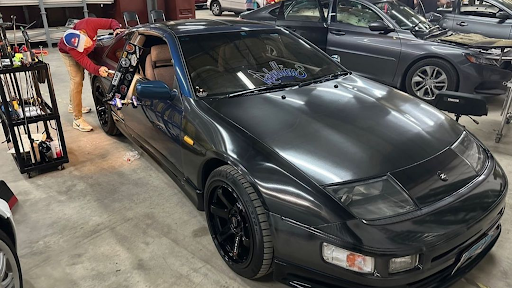
A technician starts by examining the panel closely, usually under a specialized reflective light board that makes even small dents easy to spot, since dents that are nearly invisible under normal lighting show up clearly under the right angle of reflected light. From there, they identify the best access point, whether that’s through a door jamb, behind a taillight, or another opening that leads to the backside of the panel.
Using long, specialized tools, the technician applies slow, controlled pressure to push and massage the dent back into its original position. This isn’t a quick push-and-done process; it takes patience and a steady hand, since rushing can stretch the metal in ways that are harder to correct. Once the dent is worked out, the panel is checked one more time under that same specialized lighting to confirm a smooth, even finish across the entire surface.
Why It’s Different From Traditional Auto Body Work
Traditional auto body repair typically involves sanding down the damaged area, applying filler to smooth out the shape, and then repainting the panel to match the rest of the car. Paintless repair skips all of that. There’s no sanding, no filler, and no time spent in a paint booth, which means the process preserves the factory finish instead of replacing it with a new coat that has to be color-matched and blended.
It’s also typically faster and less invasive overall, since there’s no drying or curing time involved. You can see the kind of clean, seamless results the technique produces by looking through before and after photos of completed hail repairs, many of which show panels that are impossible to distinguish from the untouched sections of the same car.
When Traditional Auto Body Work Is Still Needed
Cracked or chipped paint usually requires filler and repainting, since paintless techniques depend on that paint layer staying intact through the process. Deep creases near panel edges or trim pieces can also be harder to reshape without risking further damage to the metal. A trustworthy shop will recommend the right method for each individual panel rather than forcing every dent through the same process, and will explain clearly why a particular panel needs a different approach.
What This Means for Your Repair Bill
Because paintless dent repair skips paint materials and the labor involved in matching color, it’s generally a more affordable option when it’s available for a given panel. Insurance adjusters are also familiar with the technique and often approve it readily, since it delivers a fully restored panel at a lower cost than traditional bodywork. Ask your shop directly which panels on your vehicle qualify, since a mix of methods across one car is common and doesn’t mean anything went wrong with the repair plan.
How to Prepare Your Car for a PDR Appointment
There isn’t much prep work required on your end before a PDR appointment, which is part of what makes the process so convenient. It helps to remove any personal items from the vehicle, particularly anything near the dashboard or trunk area a technician might need to access. If you have photos of the damage from right after the storm, bringing those along can help the shop confirm nothing has changed or worsened between the storm and your appointment.
Caring for Your Car After Paintless Repair
Once the repair is finished, your car doesn’t need any special treatment, since the factory paint was never touched during the process. Normal washing and waxing routines are perfectly fine right away, and there’s no curing period to work around the way there would be after a fresh repaint. Keeping your warranty paperwork on file is still worthwhile, in case you ever want to reference it or if you notice anything unusual with a repaired panel down the road.
The Tools Behind the Technique
The tools used in paintless dent repair look deceptively simple, mostly long metal rods and picks of varying lengths and tip shapes, but using them well takes years of practice. Each tool is designed to reach specific areas of a panel and apply pressure at precise angles, and technicians often build a personal collection tailored to the kinds of vehicles and damage they see most often. Alongside the metal tools, reflective light boards play an equally important role, since they let a technician see subtle variations in a panel’s surface that would be invisible under standard shop lighting.
Common Misconceptions About PDR
Some drivers assume paintless dent repair is a newer, less proven technique compared to traditional bodywork, when in fact it’s been used in the auto industry for decades and has become the standard response to hail damage nationwide. Others assume the process must involve some kind of chemical treatment or heat application, when it’s really a purely mechanical technique relying on controlled pressure and patience rather than anything applied to the panel itself.
Why the Skill Gap Between Technicians Matters
Because paintless dent repair is entirely hands-on, the gap in quality between an experienced technician and a novice can be significant, even though both may technically be performing the same repair method. An experienced technician reads the metal as they work, adjusting pressure and technique based on subtle feedback that’s hard to teach quickly. This is part of why certification and real-world experience matter so much when choosing a shop, since the tools themselves are only as good as the hands using them.
Frequently Overlooked Panels
When assessing hail damage, owners often focus on the hood and roof while overlooking spots like the tops of side mirrors, the trunk lid, and the leading edge of the doors, all of which can pick up hail damage during a storm with strong winds. A thorough inspection should check every horizontal and near-horizontal surface on the vehicle, not just the panels that are easiest to see from a standing position beside the car.
A Quick Comparison for Visual Learners
If you picture a dented panel as a shallow bowl pressed into the metal, traditional bodywork essentially fills that bowl from the outside and smooths a new surface over it, then paints the result to match. Paintless repair instead pushes the bottom of that bowl back up from underneath until the panel returns to its original flat or curved shape, using the metal’s own natural properties rather than adding anything new to the surface. That single distinction explains almost everything else about why the two methods differ so much in cost, time, and long-term appearance.
Talking to Your Shop in Plain Language
You don’t need to learn technical terminology to have a productive conversation with a repair technician. Simple questions like whether a specific dent will fully disappear, how many total dents the vehicle has, and whether any panels need a different approach are all reasonable to ask in plain language, and a good technician will answer just as plainly. If an explanation ever feels overly technical or vague, it’s completely fair to ask for a simpler version, since understanding your own repair shouldn’t require an auto body background.
Putting It All Together
Understanding paintless dent repair doesn’t require becoming an expert in auto body work. It comes down to a few core ideas, the technique works from behind the panel rather than the front, it preserves rather than replaces the factory paint, and it’s most effective on the kind of shallow, widespread dents that hail typically produces. Armed with that basic understanding, you’re in a much better position to have an informed conversation with any shop you’re considering, and to recognize when a technician is explaining your repair honestly and clearly.
Why This Explanation Matters
Understanding how paintless dent repair actually works isn’t just a matter of curiosity; it’s practical knowledge that helps you evaluate a shop’s honesty and ask better questions during your own repair. Owners who understand the basics of the process are less likely to be talked into unnecessary traditional bodywork, and more likely to recognize when a shop is explaining their specific repair plan accurately. A little bit of knowledge goes a long way toward making sure your car gets the right repair the first time around.
A Simple Process Worth Trusting
At the end of the day, paintless dent repair earns its reputation through consistent, visible results rather than clever marketing. Kansas City drivers who go through the process once tend to request it by name the next time hail rolls through, simply because the outcome speaks for itself. Understanding the mechanics behind that outcome, the careful hand work, the specialized tools, and the patience required, makes it easier to appreciate why a technique this straightforward has become the standard rather than the exception.
A Closing Thought for Skeptical Owners
If the idea of fixing dozens of dents without a drop of paint still sounds too good to be true, that skepticism is understandable and worth addressing directly with your chosen shop. Ask to see the process in action, review before-and-after photos, or simply ask a technician to walk you through a single dent from start to finish during your inspection. Seeing the technique demonstrated firsthand tends to resolve any lingering doubt far more effectively than any explanation on a page ever could.
Conclusion
Paintless dent repair is a simple, effective process once it’s explained clearly, and it’s become the preferred fix for hail damage across Kansas City for good reason. The next time you’re dealing with a dinged-up hood or roof, ask your shop whether your vehicle qualifies for this approach before assuming a full repaint is necessary.
Brand Mention and CTA
The Hail Group brings certified paintless dent repair expertise to drivers across Kansas City, MO, with a straightforward process from first inspection to final walkaround. The team also offers guidance on no deductible repair options for owners looking to minimize out-of-pocket costs. Schedule a free hail inspection to find out if PDR is right for your car.
FAQs
Does paintless dent repair really work as well as it sounds?
Yes, for the large majority of hail dents where the paint remains intact, PDR produces results that are indistinguishable from an undamaged panel.
Can PDR fix large dents, not just small ones?
It can, depending on the depth and location of the dent. Larger, shallower dents are often easier to work than small, sharp ones, so size alone doesn’t rule out the technique.
Is paintless dent repair safe for a car’s resale value?
Yes, since it preserves the original factory paint, PDR typically has a more favorable impact on resale value than a repair involving a repaint.
How is PDR priced compared to traditional repair?
PDR is generally less expensive, since there’s no cost for paint materials or the extra labor involved in color matching and blending.
Will PDR technicians work directly with my insurance company?
Many shops, including The Hail Group’s certified team, coordinate directly with insurance carriers to simplify the claims process for the vehicle owner.

Josh Jones has been a pivotal part of The Hail Group for over 8 years, bringing his expertise in automotive repair, particularly in hail damage and Paintless Dent Repair (PDR). With a background in both technical and customer-facing roles, Josh is passionate about providing clear, informative content to help consumers make informed decisions about their vehicle maintenance. His goal is to simplify complex topics and ensure that every reader walks away with practical knowledge.
