
The storm passes, the sun comes back out, and you walk outside to find your car covered in dents. Then the questions start piling up. Who should you call first, your insurer or a repair shop? How long will you go without your car? What actually happens to it once you drop it off?
Auto hail repair in Mesa follows a clear path from first inspection to final walkaround. Once you know the steps, the whole process feels far less overwhelming. This guide walks you through each stage so you know what to expect and what to ask along the way.
Right After the Storm
The first few hours after a hailstorm set up everything that follows. A few simple steps help protect your car and your claim.
Photograph the damage. Take clear photos of every panel, including the hood, roof, trunk, and both sides. Shoot from several angles, since glare can hide dents in a single shot. If you can, include a wide photo that shows the car in its parking spot.
Note the date and time. Write down when the storm hit and where your car sat. Your insurer will ask for these details.
Check glass, mirrors, and lights. Look for cracked windshields, broken mirror housings, and damaged light covers. Cracked glass can worsen quickly in Arizona heat, so report it right away.
Park under cover if you can. Monsoon storms can come back in waves. A garage, carport, or covered lot protects your car from a second round. You can also check the National Weather Service in Phoenix for updated storm warnings across the East Valley.
If you aren’t sure how much damage your car took, a quick guide on how to check for hail damage on your car can help you spot dents you might otherwise miss.
Step One: The Free Hail Inspection
Before anyone fixes anything, a technician needs to see the full scope of the damage. That starts with a free hail inspection.
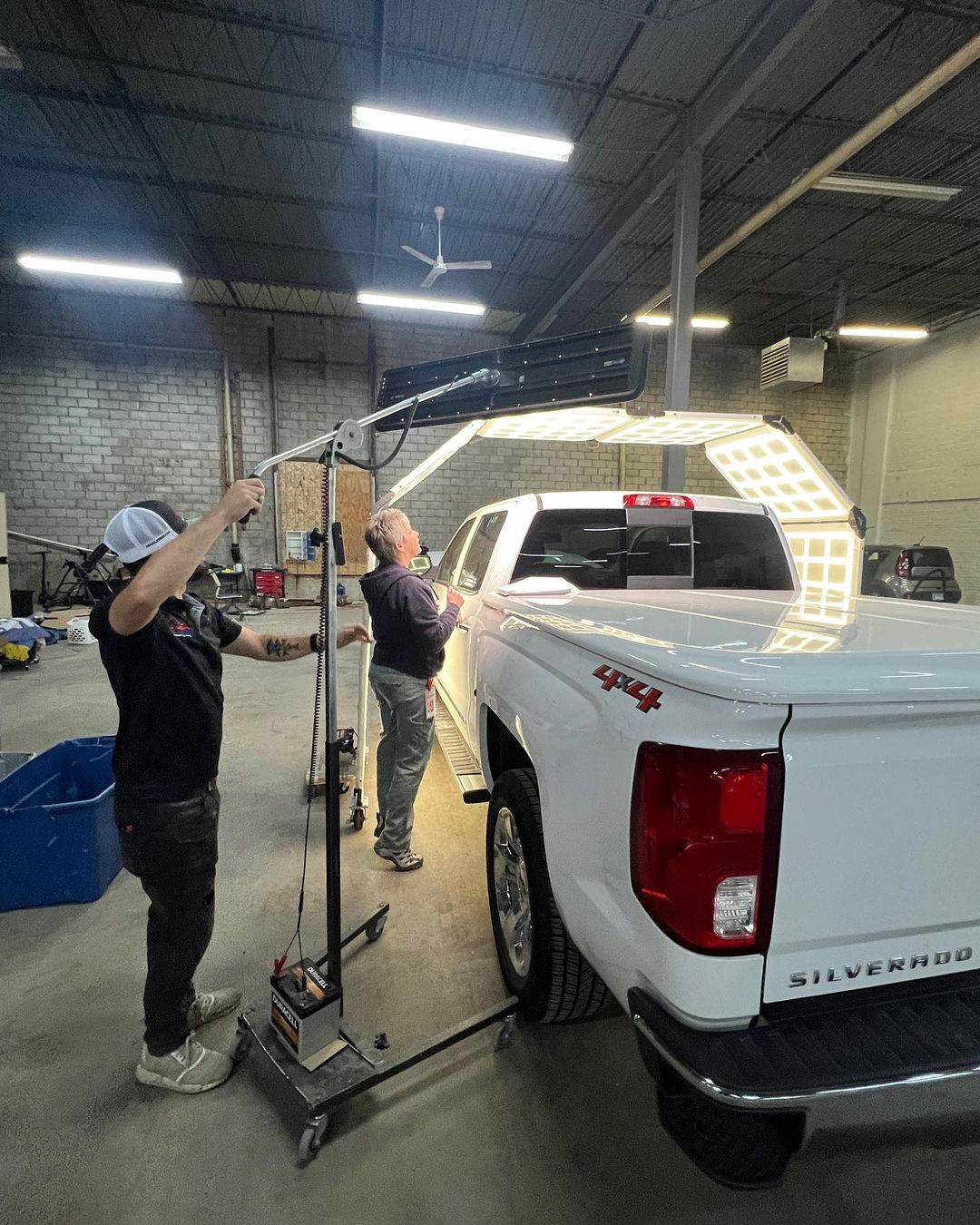
During the inspection, the technician moves your car into good lighting and uses reflection boards to reveal every dent. They check the roof, hood, trunk lid, fenders, doors, pillars, and rails. For each panel, they record a dent count and note dent sizes.
They also look for anything that might fall outside paintless repair, such as cracked paint, sharp creases, or torn metal. A good technician tells you about those areas upfront.
By the end, you have a detailed damage report. That report becomes the foundation of your insurance claim and your repair plan.
Step Two: Filing and Managing the Claim
Hail damage typically falls under the comprehensive portion of an auto policy. If you carry comprehensive coverage, your insurer usually pays for repairs after you meet your deductible.
Here’s how the claim usually moves:
- You file the claim. Contact your insurer by phone, app, or website and share the date, location, and photos.
- An adjuster reviews the damage. They write an initial estimate, sometimes in person and sometimes from photos.
- Your repair team coordinates with the adjuster. They share their inspection report and make sure the estimate reflects the real damage.
- Supplements cover hidden damage. If the technician finds more dents after removing trim, they document it and request approval for the added work.
Deductibles can feel like a heavy hit after an unexpected storm. Some repair companies help with that cost. The Hail Group offers a $0 deductible program for qualifying claims, which can take much of the financial sting out of the repair.
Hail claims are common across the country. The Insurance Information Institute tracks billions of dollars in hail losses each year, and insurers handle a flood of claims after every major storm. Filing early helps you get in line sooner.
Step Three: Scheduling and Drop-Off
Once your claim moves forward, you schedule a time to drop off the car. Your repair team should give you a realistic timeline based on the inspection.
Turnaround depends on a few factors:
- Dent count. A car with twenty dents takes far less time than one with two hundred.
- Panel access. Roofs and braced areas take longer than easy-to-reach doors.
- Panel material. Aluminum panels need more care than steel.
- Parts. If the car needs replacement mirrors, glass, or trim, part availability can affect timing.
For a deeper look at timing, see how long paintless dent repair takes for different levels of damage.
Before you drop off the car, check whether your policy includes rental coverage. If it does, arrange a rental so your daily routine doesn’t stall while the repair moves forward.
Step Four: The Repair Itself
With your car in the shop, the technician gets to work.
First, they remove whatever they need to reach the back of each damaged panel. That might include the headliner, taillights, or interior trim. They use factory access points and keep track of every clip and fastener.
Next, they set up reflection lights over the panel and start the repair. Using long steel rods, they push each dent out from behind with many small, controlled presses. They start at the edges of each dent and work toward the center. Where rods can’t reach, such as roof rails and braced sections, they use glue pulling to lift the metal from the outside.
As they go, they tap down any small high spots with a knockdown tool so the panel ends up perfectly flat. They repeat this process across every damaged panel on the car.
Finally, they reinstall everything they removed. Each trim piece, light, and headliner section goes back where it came from.
Step Five: Quality Checks Before Release
Before the car leaves the shop, the technician inspects every repaired panel again under reflection lights. They look from several angles for any leftover ripple, high spot, or missed dent. If something needs another pass, they take care of it before calling you.
Many shops also wash the car at this stage. A clean surface makes the finish easier to see and gives you a clear view of the results during pickup.
The Final Walkaround
When you pick up the car, set aside a few minutes for a walkaround with the technician. This is your chance to see the work and ask questions.
During the walkaround:
- Look at the panels in good light. Shade or indoor lighting usually shows the finish best. Direct midday sun can make it harder to judge.
- Check the roof. It usually takes the most hail, so give it a careful look.
- Confirm all trim and lights work. Test the taillights and check that interior trim sits flush.
- Review the paperwork. Make sure you understand what the shop repaired, how they handled the insurance claim, and whether you owe anything for the deductible.
- Ask about the warranty. Know what it covers and how to reach the shop if you notice something later.
A good technician welcomes this conversation and walks you through the repair in plain language.
If You Notice Something Later
Sometimes a small dent shows up days later, once the light hits the panel at just the right angle. That’s normal and easy to fix.
Contact the shop, describe what you see, and schedule a time to bring the car in. A reputable company with a written warranty will take care of it. That’s one more reason to choose a local team that will still be around after the storm season ends.
Conclusion
Hail damage can feel overwhelming at first, but auto hail repair in Mesa follows a straightforward path once you know the steps. It starts with photos and a free hail inspection, moves through the insurance claim and the repair, and ends with a final walkaround that confirms your car looks right. At each stage, a good repair team keeps you informed and handles the details for you.
Book your inspection soon after the storm. Early action keeps your claim moving and gets you back on the road sooner.
Start Your Repair With The Hail Group
The Hail Group specializes in paintless dent repair for hail-damaged vehicles, and our Phoenix area hail repair team serves Mesa and the rest of the East Valley. Our PDR specialists preserve your factory paint, work directly with your insurance adjuster, and back every repair with a lifetime warranty. Qualifying claims may also be eligible for our $0 deductible program.
Book your free hail inspection and start the process today.
Frequently Asked Questions
How soon after a hailstorm should I schedule an inspection?
As soon as you can, ideally within a few days. Early inspections help you file a stronger claim, and quick repairs keep any small paint chips from getting worse in the heat.
How long does auto hail repair usually take from start to finish?
Light damage may take a day or two, while heavy damage can take several days or more. Insurance approval and part availability can also affect the overall timeline.
Do I need to be present for the insurance adjuster’s visit?
It helps, but it isn’t always required. Many repair teams meet with adjusters directly and share their inspection findings, which takes much of that burden off you.
What should I check during the final walkaround?
Look at every panel in good light, especially the roof and hood. Confirm that lights and trim work and sit properly, review your paperwork, and ask about the warranty.
What happens if the shop finds more damage after repairs begin?
The shop documents the added damage and files a supplement with your insurer. Once the insurer approves it, the technician repairs the additional dents as part of the same job.

Josh Jones has been a pivotal part of The Hail Group for over 8 years, bringing his expertise in automotive repair, particularly in hail damage and Paintless Dent Repair (PDR). With a background in both technical and customer-facing roles, Josh is passionate about providing clear, informative content to help consumers make informed decisions about their vehicle maintenance. His goal is to simplify complex topics and ensure that every reader walks away with practical knowledge.
