Picture this. A monsoon storm leaves your hood and roof covered in small dents, and you take the car to a body shop for a quote. The estimate comes back with a list of line items you didn’t expect. Sanding. Body filler. Primer. Base coat. Clear coat. Color blending into the next panel. Suddenly, a few minutes of hail turns into a week without your car and a finish that will never be original again.
Many drivers accept that quote because they don’t know another option exists. It does. Car hail repair Phoenix specialists can fix most hail damage without fillers, sanding, or fresh paint. This guide breaks down what traditional body work actually does to your car, where it falls short in the desert, and why the paintless route makes more sense in most cases.
What Traditional Body Work Actually Does to Your Car
Conventional dent repair follows a long chain of steps, and each one changes your car a little more.
First, the technician sands the damaged area down past the clear coat and paint, often to bare metal. Next, they spread body filler into the low spots to build the surface back up to the right level. Filler doesn’t move the dent out. It fills the dent in and hides it. After the filler cures, they sand it smooth and shape it to match the panel.
Then the painting starts. The shop applies primer, then a base coat to match your car’s color, then a clear coat on top. To make the repair blend in, painters often extend the new paint into neighboring panels so the color shift looks less obvious.
For one or two dents, that’s a lot of work. For a hood, a roof, and a trunk lid peppered with sixty or more hail strikes, it turns into a major project.
The Hidden Downsides of Filler and Fresh Paint
Traditional body work has its place. Still, it comes with trade-offs that many owners never hear about until after the repair.
Color Matching Under Arizona Sun
Paint matching is part science and part art. Shops use paint codes and computer mixing, but your car’s original paint has aged in ways the new paint hasn’t. Sunlight changes how colors appear, and Phoenix gets more of it than almost anywhere in the country. A repaint that looks perfect inside the shop can look a shade off in the parking lot at noon.
Over time, the gap can grow. New paint and original paint don’t always fade at the same rate, so a panel that matched at pickup may stand out a year or two later.
Filler That Struggles in Extreme Heat
Metal and body filler expand and contract at different rates. In a mild climate, that difference rarely causes trouble. In Phoenix, where summer highs regularly climb past 110 degrees and the National Weather Service in Phoenix issues extreme heat warnings season after season, panels go through serious temperature swings every day.
That constant movement can stress the bond between filler and metal. Hairline cracks, bubbling, and shrinkage lines sometimes appear months after the repair. By then, the car has usually left the shop, and the owner has to chase the problem down.
Resale and Inspection Problems
Dealers and savvy private buyers often run a paint thickness gauge across a car’s panels. Factory paint reads at a consistent thickness. Refinished panels read thicker, sometimes much thicker if filler sits underneath.
That reading tells a buyer the car has had body work, and many will lower their offer accordingly. Some lease companies also inspect for refinished panels at turn-in.
How Paintless Repair Leaves the Factory Finish Alone
Paintless dent repair, or PDR, skips every one of those steps. Instead of hiding the dent, a technician moves the metal back to its original shape.
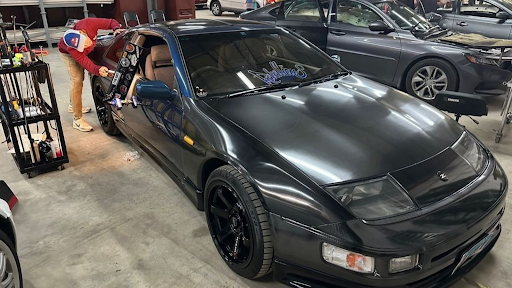
Using long steel rods, they reach behind the panel through factory openings and apply slow, controlled pressure to the back of each dent. Where they can’t reach from behind, they bond small glue tabs to the outside and lift the metal gently. The paint stays bonded to the metal throughout, so it simply moves back into place with it.
That approach brings real advantages.
- No chemicals. No filler, primer, or solvents go onto your car.
- No sanding. Your original clear coat and corrosion protection stay intact.
- No drying or curing time. Your car is ready the moment the technician finishes the metal work.
- No color match to worry about. The paint on every panel is the same paint that left the factory.
You can see the difference for yourself in a before-and-after gallery of real hail repairs. A well-done PDR repair leaves the panel looking untouched.
Time and Cost Compared
Beyond appearance, PDR usually beats traditional repair on time and cost.
Time. Body shops need hours for filler to cure and paint to dry, and they often juggle many jobs at once. A hail-damaged car can sit for a week or more. PDR skips the curing and drying stages entirely, so many repairs wrap up in a few days, depending on the dent count.
Cost. Paint materials and booth time make up a big part of a body shop bill. PDR uses no paint at all, which keeps material costs low. Lower repair totals can also make the insurance claim simpler, since the adjuster has fewer line items to approve.
Rental days. If your policy covers a rental car, a shorter repair means fewer rental days to worry about. If it doesn’t, getting your own car back sooner saves you money out of pocket.
Your adjuster will likely favor the paintless option for the same reasons. It costs less, takes less time, and keeps the car closer to its pre-storm condition.
When Fillers and Paint Still Make Sense
PDR isn’t the answer for every dent. A trustworthy shop will tell you when a panel needs something more.
Traditional bodywork may still make sense if a panel has:
- Cracked or chipped paint inside or around the dent
- Torn or punctured metal
- Very sharp, deep dents where the metal has folded
- Old filler from a previous repair
The good news is that these situations usually affect only a panel or two, not the whole car. A specialist can restore everything else with PDR and send only the problem areas for conventional repair.
The best way to sort PDR-friendly panels from the rest is a thorough inspection. A technician checks each panel under proper lighting, counts the dents, and notes any paint damage before recommending a plan.
Questions to Ask Before You Approve Any Repair
Before you sign off on a body shop estimate or a hail repair plan, ask a few direct questions. The answers tell you a lot about how the shop plans to treat your car.
- Will you sand, fill, or repaint any panel? If yes, ask which panels and why. Make sure each one truly needs it.
- Do your technicians specialize in hail damage? General body shops and dedicated auto hail damage repair specialists work very differently.
- Do you work directly with my insurance company? A shop that handles adjuster communication saves you time and phone calls.
- What warranty comes with the work? A strong written warranty shows the shop stands behind its results.
- How long will my car be in the shop? You should get a clear estimate once the inspection is complete.
If a shop gets vague or defensive about any of these, consider getting a second opinion before you commit.
Conclusion
Most hail damage doesn’t need sanding, filler, or a new coat of paint. Car hail repair Phoenix specialists use paintless dent repair to reshape the metal and keep your factory finish intact, which means a better-looking result, a faster turnaround, and a car that holds its value. Traditional bodywork still has a role for cracked paint or torn metal, but it shouldn’t be the default for every hail dent.
Before you approve any quote, ask whether PDR can handle the damage first. That one question can save you time, money, and a lifetime of wondering whether your hood matches your fender.
Get a Paintless Repair Plan From The Hail Group
The Hail Group focuses on paintless dent repair for hail-damaged vehicles, and our Phoenix auto hail repair team serves drivers throughout the Valley. Our PDR specialists preserve your original paint, coordinate directly with your insurance adjuster, and stand behind every repair with a lifetime warranty. Qualifying claims may also be eligible for our $0 deductible program.
Schedule your free hail inspection and find out which of your panels qualify for paintless repair.
Frequently Asked Questions
Is paintless dent repair as durable as traditional body work?
Yes. PDR restores the metal to its original shape, so there’s no filler to crack or paint to peel. The repair lasts as long as the panel itself, which often makes it more durable than a filled and repainted panel.
Can a dealer tell my car had hail damage after paintless repair?
A well-done PDR repair leaves no filler and no extra paint, so a paint thickness gauge reads the same as factory paint. In most cases, a dealer can’t find any physical sign of the repair.
Why would an adjuster recommend repainting a hail-damaged panel?
An adjuster may recommend conventional repair if a panel has cracked paint, torn metal, or very sharp dents. If you think a panel qualifies for PDR, ask a hail specialist to review it and share their findings with the adjuster.
Does Phoenix heat affect how long hail repairs last?
Heat affects repairs that use body filler, since filler and metal expand at different rates. PDR uses no filler, so extreme heat doesn’t weaken the repair the same way.
How do I know if my hail dents qualify for paintless repair?
Look for intact paint around each dent. If the paint isn’t cracked or chipped, the dent likely qualifies. A professional inspection under proper lighting gives you a definite answer for every panel.

Josh Jones has been a pivotal part of The Hail Group for over 8 years, bringing his expertise in automotive repair, particularly in hail damage and Paintless Dent Repair (PDR). With a background in both technical and customer-facing roles, Josh is passionate about providing clear, informative content to help consumers make informed decisions about their vehicle maintenance. His goal is to simplify complex topics and ensure that every reader walks away with practical knowledge.
