
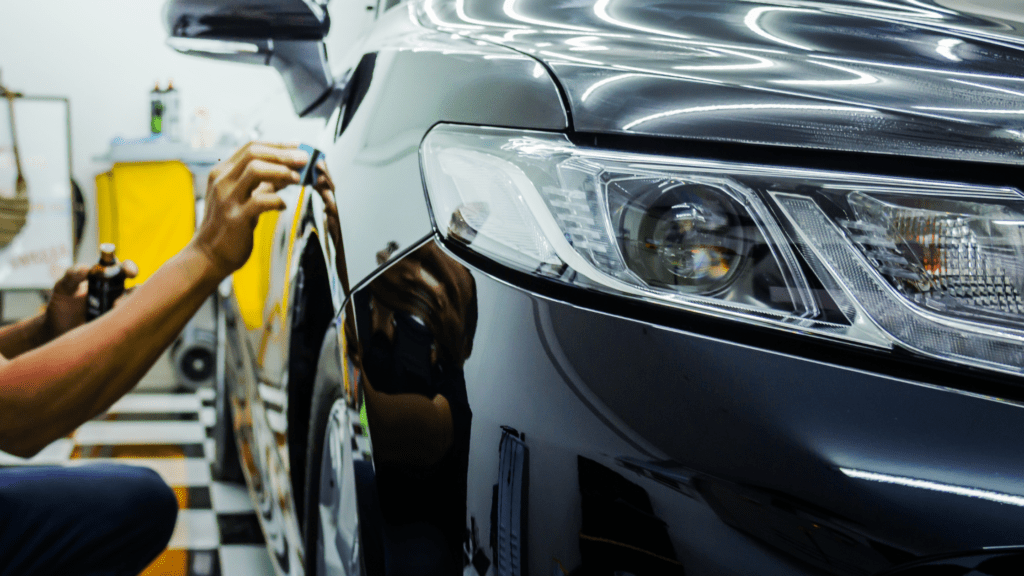
Hail damage rarely announces its full impact at first glance. Under cloudy skies or in dim parking lots, dents can seem harmless, almost forgettable. Yet when light hits the surface just right, the truth emerges. Subtle distortions ripple across the paint. Reflections bend where they once flowed smoothly. The vehicle begins to feel altered, even if the damage appears minor. We understand that hail damage is not only a visual issue. It is a structural and material concern that unfolds over time. Each dent represents displaced metal. Each impact introduces tension beneath the surface. When that tension is ignored or mishandled, it can lead to paint failure, accelerated aging, and a gradual decline in vehicle value. Precision is the difference between restoration and compromise. Generalized repair methods often focus on speed or surface appearance alone. Specialized techniques focus on accuracy, restraint, and long-term preservation. This is why Dent Experts Hail Repair relies on refined methods designed specifically for hail damage rather than broad collision repair approaches.
Precision dent removal protects the factory finish, maintains panel integrity, and restores the vehicle without rewriting its original story. To understand why experts insist on specialized techniques, we must first understand how hail actually affects a vehicle.
The Importance of Precision in Hail Damage Repair
Hailstorms are increasingly common in certain regions, and their effects on vehicles are cumulative. A single storm can leave dozens or even hundreds of impact points across a roof, hood, and body panels. While each dent may be small, together they alter the vehicle’s surface tension and visual balance.
Even minor dents influence how light travels across paint. That change alone can reduce perceived quality and resale value. More importantly, improperly repaired dents can stretch metal beyond its elastic limits or weaken paint adhesion. Once that happens, cracks, peeling, or discoloration may appear months or years later.
Precision matters because factory paint systems are engineered to perform as a unified layer. Clear coat, base coat, and primer are designed to flex together within narrow tolerances. Aggressive sanding, filling, or repainting disrupts this system permanently. Specialized techniques work within those tolerances rather than against them.
Paintless Dent Repair stands as a cornerstone of precise hail damage restoration. It allows us to correct damage while preserving original paint and factory contours. When executed correctly, it leaves no evidence of repair and no hidden compromises beneath the surface.
This philosophy guides everything that follows, from inspection to technique selection to final quality assurance.
Section 1: Understanding Hail Damage Patterns
Hail damage is never uniform. The shape, size, and velocity of hailstones vary within a single storm. Wind direction changes impact angles. Vehicle orientation determines exposure. As a result, no two vehicles carry the same damage pattern, even when parked side by side.
Roofs often sustain vertical impacts that create shallow but widespread dents. Hoods experience angled strikes that stretch metal differently. Doors and quarter panels may show isolated but deeper depressions due to deflection from surrounding structures. Each surface reacts according to its curvature, reinforcement, and material composition.
Metal thickness plays a critical role. Thinner panels displace more easily but require careful control to avoid overcorrection. Thicker or reinforced areas resist movement and demand alternative access strategies. Paint quality and age also influence repair decisions, as older finishes may be less flexible than newer ones.
Accurate assessment is essential before any repair begins. We analyze how deeply the metal has moved, whether it has stretched, and how the surrounding areas have absorbed force. Misjudging this stage leads to cracked paint, uneven surfaces, or visible high spots that reduce vehicle value.
Advanced inspection tools allow us to see what the naked eye cannot. Reflective lighting reveals subtle depth changes. Digital dent mapping helps document damage patterns and guide repair sequencing. This analytical approach ensures that each dent is addressed intentionally rather than reactively.
Section 2: Paintless Dent Repair as the Core Technique
Paintless Dent Repair is not a shortcut. It is a discipline built on patience and control. The technique involves reshaping metal from behind the panel using gradual, deliberate pressure. The goal is to allow the metal to return to its original position without disturbing the paint layer above it.
This process demands refined hand-eye coordination. Pressure must be applied incrementally. Too little achieves nothing. Too much creates new distortions. Each adjustment responds to how the metal reacts in real time.
The advantage of Paintless Dent Repair lies in preservation. Original paint remains intact. Factory finishes maintain their integrity. The risk of repaint depreciation disappears. Vehicles retain their authentic appearance and market credibility.
Different dent shapes require different approaches. Broad, shallow dents demand slow, expansive movements. Sharp center impacts require precise pinpoint pressure. Dents near edges or braces call for specialized access and alternative leverage techniques. Each decision reflects the unique character of the damage.
When performed correctly, Paintless Dent Repair restores the vehicle without leaving a trace. The repair becomes invisible not because it is hidden, but because the original surface has been genuinely restored.
Section 3: Specialized Tools and Technology for Precise Results
Precision cannot exist without the right tools. Specialized dent repair instruments are engineered to translate subtle movements into controlled results. Rods vary in length, thickness, and tip design to accommodate different access points and metal responses.
Knockdown tools refine surface texture and relieve tension. Tapping tools soften high spots created during correction. Reflective LED light boards act as visual guides, revealing distortions that would otherwise remain undetected.
Technology enhances accuracy by reducing guesswork. Digital measuring systems confirm contour alignment. Reflective lighting exposes micro-irregularities before they become permanent. These tools allow us to verify progress at every stage rather than relying on assumptions.
Used together, technology and craftsmanship create consistency. Uniform results across multiple dents maintain visual harmony across the entire vehicle. This level of refinement protects both aesthetics and long-term value.
Section 4: Technique Selection Based on Dent Characteristics
No two dents deserve the same response. Effective repair depends on matching the technique to the condition. Panel material influences pressure tolerance. Dent depth determines pacing. Location dictates access strategy.
Some repairs require a combination of methods. Initial lifting may be followed by blending. Tension relief may precede final shaping. Each step is chosen to minimize stress on the metal and paint.
Customization prevents overworking the panel. Excessive manipulation can weaken metal memory or introduce secondary distortions. Thoughtful technique selection preserves structural integrity while achieving seamless restoration.
Precision is not about doing more. It is about doing exactly what is necessary and nothing beyond that.
Section 5: Training, Expertise, and Consistency
Specialized techniques demand specialized training. Precision is learned through repetition, observation, and continuous refinement. Technicians must stay informed about evolving vehicle materials, paint systems, and structural designs.
Modern vehicles introduce new challenges. Aluminum panels behave differently from steel. Advanced clear coats respond differently to pressure. Ongoing education ensures techniques remain effective and safe.
Consistency matters just as much as skill. Multiple dents on a single vehicle must be repaired with uniform results. Inconsistency draws attention immediately. Expertise ensures that repairs blend seamlessly across panels.
When experience guides technique, repairs avoid uneven surfaces, paint blemishes, or lingering distortions. Precision paired with restraint produces results that age well rather than degrade over time.
Section 6: The Role of Inspection and Quality Assurance
Repair does not end when tools are set aside. Inspection confirms that restoration is complete. Reflective lighting reveals surface continuity. Digital imaging verifies alignment. Tactile assessment detects subtle inconsistencies that the eye may miss.
Quality assurance protects against hidden imperfections that could reappear later. It ensures repairs hold up under varying light conditions and over time.
Client consultation reinforces transparency. Understanding what was repaired and how it was restored builds confidence. This final step ensures that restoration is not only successful but trusted.
Section 7: Maintaining Vehicle Value Through Precision Repairs
Precise dent removal preserves resale and trade-in value. Original paint remains untouched. Panel integrity stays intact. Buyers recognize authenticity even if they cannot articulate it.
Vehicles repaired with precision reflect cleanly. Lines flow naturally. Insurance evaluations favor non-invasive methods. Long-term depreciation is minimized.
Maintenance supports longevity. Regular washing prevents residue buildup. Protective coatings shield repaired areas. Periodic inspections ensure surfaces remain stable.
Precision repairs reward care by maintaining their integrity over time.
Conclusion: Expert Techniques Ensure Optimal Results
Precision hail damage repair is the result of specialized techniques, disciplined assessment, advanced tools, and skilled execution. Paintless Dent Repair by The Hail Group preserves factory finishes. Customized approaches protect metal integrity. Quality assurance ensures lasting results.
These practices restore appearance while safeguarding long-term value. They respect the vehicle as a complete form rather than a collection of panels.
If your vehicle has experienced hail damage, we encourage you to schedule a free hail inspection to evaluate its condition and understand the most precise path forward.
At Dent Experts Hail Repair, our specialized techniques and trained technicians restore your vehicle with precision, maintaining its original beauty and value.
