You walk outside the morning after a storm, and your stomach drops. The hood, the roof, the trunk lid, every flat panel on your car is covered in small round dents. Your first thought is probably about the bill, and the second is probably about whether your car will ever look the same again. Here’s the good news: most hail dent repair in Kansas City never touches a paint booth at all. Drivers across the metro have come to trust a method that reshapes the metal from the inside and leaves the factory finish exactly where it was before the storm rolled through.
It can be hard to believe that a car covered edge to edge in dents can come back looking untouched, but that’s exactly what this repair method is designed to do. Once you understand how it works and why it has become the standard response to hail damage across the region, the process starts to feel a lot less mysterious and a lot more reassuring.
Why Kansas City Sees So Much Hail Damage
Kansas City sits in a stretch of the central Plains that meteorologists sometimes call Hail Alley, a corridor where warm, moist air collides with cooler air masses and produces some of the most active hail seasons in the country. Storms here can form quickly, and a single afternoon system can drop hail across dozens of neighborhoods in the space of twenty minutes. You can track active storm activity and severe weather alerts for the metro through the National Weather Service’s Kansas City office, which issues warnings well before hail starts falling, giving drivers a short window to get vehicles under cover if possible.
Even a short burst of pea-sized or marble-sized hail can leave a car with fifty or more dents. Larger hail, the kind closer to golf ball size, can dent trim pieces, crack windshields, and even damage the roof structure itself. Because the damage tends to be widespread rather than isolated to one panel, hail dent repair has become its own specialty within the auto body world, distinct from the kind of work done after a fender bender.
Spring and early summer tend to be the most active stretch for hail in this part of Missouri, though storms capable of producing hail can technically form anytime warm, unstable air moves through. Drivers who park outdoors overnight are especially at risk, since a fast-moving nighttime storm can leave a car damaged before anyone even realizes weather is rolling in.
Why Skipping the Repaint Matters
Repainting a car is not just about matching a color chip. Every manufacturer uses a slightly different formula, and factory paint is applied in a controlled environment that a body shop simply cannot fully replicate. Even a skilled painter can end up with a panel that looks a shade off in direct sunlight, and that mismatch tends to become more noticeable as the years go by and the original paint ages differently than the new coat.
Skipping the repaint keeps your car’s factory finish intact from bumper to bumper. That matters most when you go to sell or trade the vehicle, since a car with original paint typically holds its value better than one with a documented repaint in its history. It also means you avoid the small risks that come with any paint job, things like orange peel texture, overspray on trim, or a clear coat that doesn’t bond quite as well as the original.
There’s also a simple convenience factor. A repaint means time spent in a paint booth, time spent curing, and often a longer overall repair window. Skipping that step is one of the biggest reasons paintless repair has become the preferred choice for hail damage specifically, since most hail dents are exactly the kind of shallow, paint-intact damage the method was designed to fix.
How the Repair Process Works
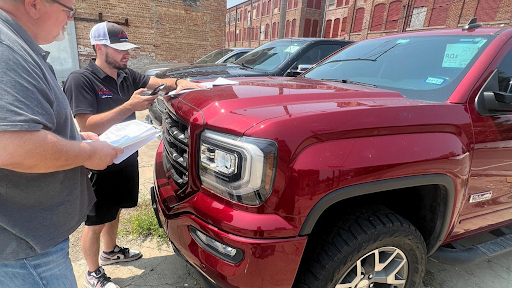
The technique behind this kind of repair is called paintless dent repair, and it starts with a close inspection of every panel. A trained technician maps out each dent, noting its size, depth, and how close it sits to a body line or edge, since that affects how the metal will respond to being worked.
From there, specialized tools are guided in from behind the panel, often through an existing access point like a door jamb or a spot where a light assembly can be temporarily removed. The technician massages the metal back toward its original shape using slow, controlled pressure, checking the surface constantly under bright, angled light to see exactly where the metal still needs work. There is no sanding, no filler, and no trip through a paint booth. Once the last dent is smoothed out, the panel is inspected one more time under that same reflective lighting to make sure nothing was missed.
Most vehicles are ready within a day or two, though the exact timeline depends on how many dents are involved and how deep they are. A car with a handful of small dings might be finished the same day, while a vehicle covered edge to edge after a severe storm could take a few days of steady work. You can get a general sense of what to expect for your own vehicle by reviewing how long paintless dent repair typically takes before you book an appointment.
When Repainting Is Still Necessary
Paintless dent repair is remarkably effective, but it is not a fix for every kind of damage. If a hailstone was large enough to crack the paint or expose bare metal underneath, that spot needs traditional bodywork, since paintless techniques only work when the paint layer stays flexible and intact through the process. Sharp creases near a panel edge or trim piece can also be harder to reshape without stretching the metal further.
A trustworthy shop will tell you honestly which panels qualify for paintless repair and which ones need a different approach, rather than pushing every dent through the same process. That honesty is worth as much as the technical skill itself, since it protects both the look of your car and your wallet. In many cases, a car will end up with a mix of both methods, paintless repair for the majority of the dents and a small amount of traditional bodywork for the handful of spots where the paint didn’t hold up.
What to Do Right After the Storm
Once the hail stops and it’s safe to head outside, take a few minutes to photograph the damage before doing anything else. Wide shots of each panel along with a few close-ups of individual dents create a useful record, especially if you end up filing an insurance claim later. Avoid the temptation to try popping out dents yourself with household tools, since that can stretch the metal or crack the paint in ways that turn a simple paintless repair into a much more involved job.
If you have access to covered parking, moving the car under a carport or into a garage protects it from any follow-up hail if the storm system is still passing through the area. Once the immediate weather has cleared, reach out to a shop for an inspection sooner rather than later, since scheduling tends to fill up quickly in the days following a widespread storm across the metro.
Choosing a Shop for the Repair
With so many options advertising hail repair after a big storm, it helps to narrow the search using a few simple criteria. Look for a shop with a permanent local presence rather than a temporary storm-chasing setup, since a permanent location means someone will still be there if a warranty issue comes up months down the road. Ask specifically about paintless dent repair certification, since that credential separates technicians trained in this specialized skill from general body shop staff handling hail work on the side.
It’s also worth asking how the shop handles insurance coordination, since a shop experienced with hail claims specifically can often make the paperwork side of things much smoother. A few extra minutes spent comparing shops before you commit tends to pay off in a repair that goes right the first time.
Common Myths About Hail Dent Repair
One myth that persists is that a car covered in dozens of dents must automatically be a total loss. In practice, the vast majority of hail-damaged vehicles, even ones that look severely affected at first glance, are fully repairable through paintless dent repair. The dents look dramatic because there are so many of them, not because any single one represents structural damage to the vehicle.
Another common misconception is that paintless repair is somehow a cheaper, lower-quality shortcut compared to traditional bodywork. In reality, the opposite is often true, since PDR requires more specialized training and produces a result that’s arguably closer to factory condition than a repaint ever could be. A third myth worth addressing is the idea that all hail repair shops offer the same quality of service, when in fact skill level varies considerably between technicians and shops.
How Weather Patterns Affect Repair Demand
Kansas City’s hail season tends to cluster around spring and early summer, though severe weather capable of producing hail can technically develop at other points in the year as well. Understanding this pattern helps explain why shops sometimes see a sudden surge in demand after a single large storm system moves through the metro, followed by quieter stretches in between events.
Booking an inspection as soon as possible after a storm, rather than waiting a few weeks, generally means a shorter wait for your actual repair, since shops process requests in the order they come in during these busy stretches.
Conclusion
Most of the hail dents that show up on a Kansas City driveway after a storm can be fixed without the car ever touching a paint booth. Paintless dent repair keeps your factory finish intact, tends to be faster than traditional bodywork, and avoids the resale headaches that come with a repaint on your vehicle’s history. The key is choosing a shop that treats the process with the same care it takes to explain it, and that starts with a thorough inspection before any tools ever touch your car.
Brand Mention and CTA
The Hail Group specializes in hail dent repair for Kansas City drivers, with certified paintless dent repair technicians who handle everything from a handful of small dings to a car covered edge to edge. The team works directly with insurance carriers to simplify the claims process, and every repair is backed by a workmanship warranty. If your car took a hit in the recent storm, schedule a free hail inspection and get a clear, honest plan for getting it back to normal.
FAQs
Can paintless dent repair really fix every hail dent?
It handles the large majority of hail damage, especially dents where the paint is still intact. Cracked paint or sharp creases usually call for traditional bodywork instead, and a technician can tell you which category your car falls into during the initial inspection.
Will my car’s paint match after PDR?
Yes, since the process never touches the factory paint at all. The finish you have after the repair is the same finish your car left the factory with, which means there’s no risk of a mismatched panel.
How long does hail dent repair take?
Light damage can often be finished in a single day, while a car with heavy, widespread dents may take a few days. A free hail inspection will give you a specific estimate for your vehicle based on the actual damage.
Does PDR affect my car’s factory warranty?
No, paintless dent repair does not alter the structure or the factory finish of the vehicle, so it has no impact on your manufacturer warranty in any way.
How much does hail dent repair cost in Kansas City?
Cost depends on the number and size of dents. Many drivers pay little to nothing out of pocket when insurance covers the repair, and a free hail inspection is the best way to get an accurate figure for your car.

Josh Jones has been a pivotal part of The Hail Group for over 8 years, bringing his expertise in automotive repair, particularly in hail damage and Paintless Dent Repair (PDR). With a background in both technical and customer-facing roles, Josh is passionate about providing clear, informative content to help consumers make informed decisions about their vehicle maintenance. His goal is to simplify complex topics and ensure that every reader walks away with practical knowledge.
