Hail damage can appear minor at first glance, but even small dents can impact a vehicle’s appearance, resale value, and long-term body integrity. Drivers often wonder whether small hail dents are something they can handle themselves or if professional repair is the safer option. Understanding how to get small hail dents out of a car starts with recognizing what type of damage you’re dealing with, what methods are effective, and when specialized tools and experience matter most.
Small hail dents typically affect flat or gently curved panels such as the hood, roof, trunk, and door skins. While paint may remain intact, the metal underneath has stretched or compressed, requiring careful correction. Below is a clear breakdown of your options, limitations, and best practices.
Understanding Small Hail Dents and Why They’re Tricky
Small hail dents are usually shallow impressions caused by ice impacts ranging from pea-size to marble-size hailstones. Because the dents are not deep, they often appear easy to fix, but this is where many mistakes happen.
Modern vehicles use thinner, high-strength steel or aluminum panels designed for weight reduction and safety. These materials respond differently to force than older vehicles, meaning improper repair attempts can create high spots, cracked paint, or warped panels. Even when the dent seems minor, the metal has often shifted in a way that requires precise pressure and panel knowledge to restore properly.
Another challenge is dent location. Dents near body lines, panel edges, or reinforced areas are significantly harder to correct. The metal tension in these zones is higher, and incorrect force can permanently distort the panel. This is why understanding how to get small hail dents out of a car goes beyond simply “popping” the dent; it’s about controlled reshaping.
Many car owners attempt do-it-yourself fixes before seeking professional help. Some methods can reduce the appearance of very light dents, but results vary widely.
Common DIY approaches include:
The biggest risk with DIY methods is overcorrection. Once metal is pushed too far or paint is damaged, repairs become more expensive and may require repainting. While these methods might slightly improve appearance, they rarely deliver consistent or permanent results, especially when multiple hail dents are present across a panel.
DIY solutions are best viewed as cosmetic experiments rather than true repairs. If your goal is to preserve vehicle value and factory finish, limitations should be carefully considered.
For vehicles with intact paint, Paintless Dent Repair (PDR) is widely regarded as the safest and most effective solution. This technique uses specialized tools to access the back of the panel and gradually massage the metal back to its original shape without fillers or repainting.
PDR works exceptionally well for small hail dents because:
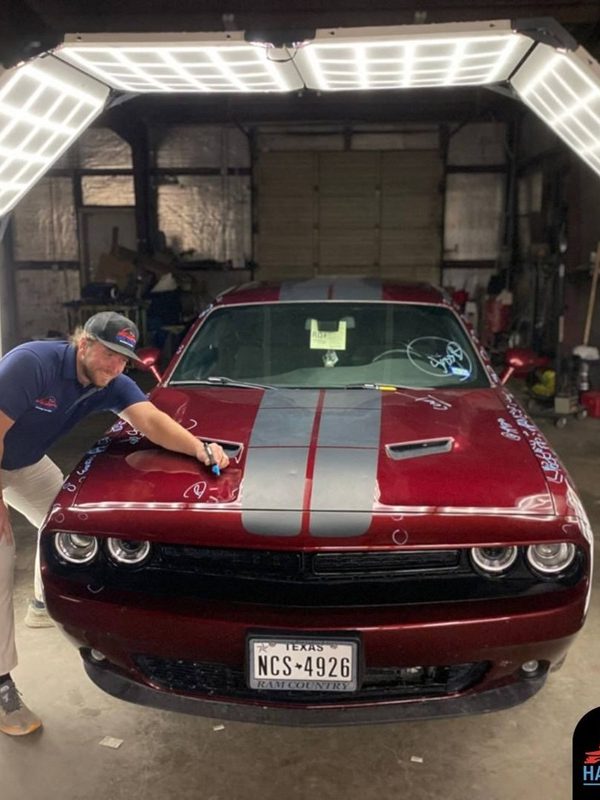
Technicians assess factors such as dent depth, metal stretch, panel access, and hail density before beginning repairs. Proper lighting and precision tools allow the technician to correct dents at the molecular level, restoring the panel without visible evidence of damage.
When people search for how to get small hail dents out of a car, they often don’t realize that PDR is not a shortcut; it’s a highly skilled trade. The success of the repair depends heavily on the technician’s experience, especially when dealing with aluminum panels or newer vehicle designs.
If your vehicle has multiple dents, dents along body lines, or aluminum panels, a professional evaluation is strongly recommended. Insurance coverage often applies to hail damage, making professional repair more accessible than many expect.
A qualified hail repair specialist can determine whether full PDR is possible or if a hybrid approach is needed. The goal is always to restore the vehicle while preserving original paint whenever possible.
For drivers looking for accurate assessments and specialized hail repair services, The Hail Group focuses exclusively on hail damage solutions using proven paintless techniques. Working with specialists who understand hail patterns, insurance processes, and advanced repair methods ensures the vehicle is restored properly rather than temporarily masked.
Knowing how to get small hail dents out of a car ultimately comes down to understanding the limits of DIY fixes and the value of precision repair. Small dents may look harmless, but correcting them the right way protects both the appearance and long-term value of your vehicle.
Definitely not. Damage from hail falls under what is termed a comprehensive claim, often referred to as an “Act of Nature.” These are events beyond anyone's control and cannot be anticipated. As such, insurance providers do not penalize policyholders with these types of claims on their records by raising their insurance rates. Your insurance representative can confirm the same when you inquire about comprehensive claims.
The cost of repairing hail damage on vehicles can fluctuate widely based on various aspects, such as the vehicle's condition and the extent of the damage. Minor damage often starts at approximately $3,000, whereas more significant harm requiring the replacement of panels and parts can surpass $15,000.
Nonetheless, hail damage falls under the umbrella of comprehensive insurance coverage. Choosing The Hail Group for your repair needs typically means you won't face any direct costs, covering everything from repair bills and insurance deductibles to rental car fees. For those without comprehensive insurance, we encourage you to contact us at (855) 666-4245 for tailored pricing options. Rest assured, our pricing is always equitable and clear.
Should your insurance policy not include rental car coverage and your vehicle requires an extended stay at our facility for repairs, The Hail Group will provide up to $35 daily towards a rental car. Considering the average rental car expense is around $17 per day, this allowance should sufficiently meet the needs of most of our clients.
Furthermore, for added convenience, we're happy to meet you at the rental agency to facilitate a smooth transition!
Absolutely. Upon request, we'll keep you informed with photos and updates, ensuring full transparency throughout the process.
A key advantage of Paintless Dent Repair (PDR) is its durability; once the metal is reshaped to its initial form, it remains so for the vehicle's lifespan. Should you encounter any issues with your car in the future that you suspect are linked to our repair work, don't hesitate to reach out. We're committed to rectifying the situation!
Our approach to customer service is guided by the principle of treating others as we'd like to be treated ourselves. This philosophy has earned us an A+ rating from the Better Business Bureau, something we take great pride in.
For customers who prefer not to travel all the way to our location, we provide a complimentary valet service for complete auto hail damage repairs.
When you opt for our valet service to the The Hail Group facility, a customer service representative will be dispatched to collect your vehicle. We will handle all communications with your insurance regarding the damage assessment and updates on the repair process. Upon completion of your vehicle's repairs, your representative will bring it directly back to you. Moreover, if The Hail Group has supplied you with a rental car, your representative will also take care of its return, at no extra cost to you!
Damage assessments can be quite subjective and may differ significantly. Moreover, identifying hail damage can be challenging in bright outdoor light, hence our reliance on specialized lights for paintless dent repair.
As experts in the field of auto hail damage repair, we are adept at addressing and settling such discrepancies. We will engage directly with your insurance provider to secure any extra funding (referred to as "supplements") required to restore your vehicle to its original condition before the loss.
Typically, you're allotted one year from the date of an incident to file a claim and get your car repaired. However, this timeframe can differ depending on the specifics of your insurance policy, so it's wise to initiate your claim and address the damage promptly.
It's important to note that the initial repair estimate is calculated based on the current costs of labor and parts. These prices are subject to change over time.
Opting not to repair hail damage on your vehicle and instead settling your insurance claim with a cash payout will lead to a limitation being placed on your policy regarding the unrepaired damage. This decision can lead to complications for several reasons.
Consider this scenario:
This discrepancy often arises because the initial insurance estimate typically (in 99.9% of cases) fails to cover all the actual damage. Thus, when you ponder over the real value of that $2,500, especially when it ends up costing you $10,000 in trade-in value, it's a significant loss.
This scenario isn't speculative; it's a common occurrence we've witnessed repeatedly.
Should you decide to proceed with the hail damage repairs at a later stage, it's crucial to inform your agent to lift any imposed restrictions on your policy.
Google Reviews

"Fine group of staff! Initially, I met Ben and Joe! I was sold on the service because of their professionalism! Later, I met Logan and Adrian. Great group to work with. I love the way my car turned out. It was worth the wait!"

"Completely awesome and great customer service. this is the second place i’ve been to trying to fix the hail damage on my car and they were the ones who could fix them the best!! like it never even happened!! awesome job!!"

"Amazing people and great service!! They were able to help get the dents out of my vehicle from a recent storm that had passed. Absolutely loved the experience, highly recommended!"